Sunday, June 08, 2014

A repost: I look at Him and He looks at me!

Happy Pentecost!!! & soon to be Corpus Christi!!! :D 

I look at Him and He looks at me!


Excerpts from [The Holy Eucharist by St. Alphonsus de Maria Ligouri], [Alone with God by Fr Heyrman S.J.], [20 Holy Hours by Fr. Mateo Crawley-Boevey SS.CC.] and [The Imitation of Christ by Blessed Thomas a Kempis]


Every religious house has a "domestic chapel", where the Blessed Sacrament is "reserved". This is an honour and a privilege, on which we should reflect these days: do we truly value Christ's presence so close to us, and do we remember it, and use it to make progress in the spiritual life? The Cure of Ars had noticed an elderly man who often knelt at the back of the church, and kept his eyes fixed on the tabernacle. The Saint once asked him what he was doing, and the old man answered, "Je l'avise et Il m'avise, I look at Him and He looks at me." Simple words, flowing from a humble heart: but Christ loves to converse with the humble ...


The Eucharist as a Sacrificial Banquet, A Mystery of Love and Intimacy:


Love longs for the presence of the beloved, and for union with him. Divine love satisfies this longing in a divine manner.

And therefore Jesus deigned "to close His earthly pilgrimage with this most wonderful dispensation" (Sui moras incolatus, Miro clausit ordine) through the institution of the Blessed Sacrament He would remain in our midst till the end of time. Indeed it is a sacramental presence veiled and hidden: but both in Holy Communion and in the tabernacle, He is really and truly with us. We can go and prostrate ourselves before Him, we can greet Him; His quiet presence supports and feeds our prayer.
But what Jesus intended through the institution of the Holy Eucharist touches our inmost being even more closely. The Council of Trent says, "Not only did the Lord intend to give to His Bride, the Church, a visible sacrifice, as is demanded by our human nature; He also gave her His sacred Body to be the spiritual food of our souls, that we might become partakers of His very life." "He that eateth me, the same also shall live by me." "He that eateth my flesh, and drinketh my blood abideth in me and I in him" (John 6: 57,58). Is it possible to devise a more intimate way of being united? It is like mutual compenetration, brought about by the partaking of materiel food: but here materiel signs point to the most sublime spiritual reality: the wisdom of God, and His infinite power in the service of His boundless love.
When Jesus trod the roads of Galilee, power went out from His mortal Body, which healed all those that merely touched the hem of His garment: and we, whenever we eat His flesh we are privileged to have the most intimate contact with His glorified Body. O Lord, heal all our ailments!
In His discourse at Capharnaum Jesus laid stress on the intimate union of the soul with Him through the eating of His Flesh and the drinking of His Blood. From this St. Paul concludes to the oneness of all those that believe in Christ, "The chalice of benediction, which we bless, is it not the communion of the blood of Christ? And the bread which we break, is it not the partaking of the body of the Lord? For we, being many, are one bread, one body all that partake of one bread" (1 Cor. 10:16,17).
Sitting at the same table, and partaking of the same food, betokens and fosters harmony and friendship. The Fathers of the Church, especially St. Augustine, regard the Eucharist as the Sacrament of unity, symbolising the unity of the Church, and moulding it into the one mystical Body of Christ. "O Mystery of piety, O sign of unity, O bond of love!"
This makes us grasp how appropriately the Bride of Christ, our Holy Mother the Church, prepares her children for Holy Communion by exhorting them to fraternal charity, and by the kiss of peace. "That they may be one, as we also are one; I in them, and thou in me; that they may be perfect in one" (John 17: 22,23).
“You envy,” said St. John Chrysostom, “the opportunity of the woman who touched the vestments of Jesus, of the sinful woman who washed His feet with her tears, of the women of Galilee who had the happiness of following Him in His pilgrimages, of the Apostles and disciples who conversed with Him familiarly, of the people of the time who listened to the words of grace and salvation which came forth from His lips. You call happy those who saw Him … But, come to the altar and you will see Him, you will touch Him, you will give to Him holy kisses, you will wash Him with your tears, you will carry Him within you like Mary Most Holy.”

Thus Jesus is truly with us. “Jesus is there!” The holy Cure of Ars could not finish repeating these three words without shedding tears. And St. Peter Julian Eymard exclaimed with joyful fervour, “There Jesus is! Therefore all of us should go visit Him!”
Mary and the Holy Eucharist
"True Body, Born of Mary Ever Virgin"
Jesus said: "I am the living bread which came down from heaven" (John 6:51). In the virginal womb of Mary the "Bread of Angels" (Panis Angelorum) assumed the form in which it would become "the food of mortal man". Even before she had become the Mother of God, the angel had greeted her "full of grace". This fullness received a further increase when. as the first living tabernacle of God among men, she carried within herself the very fountain of all graces. "He that is mighty hath done great things to her:" for she is the true Mother of the true Body, that is born of her. On the feast of Corpus Christi the Church most appropriately concludes all her hymns with the same words as on the feasts of Our Lady:
O Jesus, born of Virgin bright, Immortal glory be to Thee, Praises to the Father infinite, And Holy Ghost eternally.
Mary Offers Christ on Calvary
Mary's womb was the first altar on which the Son of God, made man, offered Himself to the Father. "Wherefore, when He (Christ, the High Priest) cometh into the world, he saith Sacrifice and oblation thou wouldst not: but a body thou hast fitted to me. Holocausts for sin did not please thee; then said I, Behold, I come. In the head of the book it is written of me that I should do thy will, O God" (Heb. 10: 5-7).
When the appointed hour had come, the sacrifice of Calvary was consummated: Mary stood by the cross, and at that supreme moment she joined her Fiat to the "consummatum est", of her Son. It is true that nothing was lacking to the sacrifice of Jesus, but the Lord willed that His Holy Mother, who was to be the Mother of all the living, should participate in His oblation in a unique and universal, even though subordinate, manner.
No one could participate in the Eucharistic Sacrifice as did Mary: therefore we say in the Canon of the Mass, "In communion with, and honouring the memory of, especially the glorious ever Virgin Mary, Mother of our Lord Jesus Christ ..." Mary's role in the work of our redemption is a subordinate one nevertheless by God's will a necessary, and therefore a universal one. When giving us His Son, God gave us all things: in a certain sense we may say that, by giving us her Son, Mary gave us all things.
The moment Mary had given her assent to the angel's message, the Word of God was made flesh; with her assent the Lamb was nailed to the cross; in a unique and most sublime manner, she has offered her Son to the Father for the redemption of mankind.
Of a pure and spotless Virgin
Born for us on earth below,
He, as man with man conversing,
Stayed, the seeds of truth to sow;
Then He closed in solemn order
Wondrously His life of woe. Sui moras incolatus, Miro clausit ordine
Pange Lingua by St. Thomas Aquinas
Mary in the Infant Church
Our Lady was "not present" when Jesus instituted the Blessed Sacrament, and ordained the Apostles to be His priests and "dispensers of the Divine Mysteries". Holy Writ explicitly mentions her presence when the Paraclete came down on the Apostles: indeed she, the new Eve and Mother of all the living, could not be absent at the moment when the Church was born, which is her Son's Mystical Body. When the brethren at Jerusalem gathered to celebrate the Eucharist, "breaking bread in commemoration of Him," the Mother of the Lord was surely with them. Though she was full of grace, and had been favoured by God in such a wonderful manner, still she remained the humble "handmaid of the Lord", and took her place among the faithful. For her, as for all the other believers, the Apostles "broke the Bread". To her also Holy Communion became the food of her soul to comfort and strengthen her till the end of her pilgrimage, and also the intimate experience of the "Communion of Saints".
Hail, true Body, born of Mary, ever Virgin,
Truly suffering, immolated on the cross for man.
Blood and water forth there flowed
From the wounded side.
In the moment of our death
Be Thou a foretaste of heaven.
O sweet Jesus! O good Jesus!
O Jesus, Son of Mary!
Ave Verum
The Eucharist as Centre of Our Life
Whenever we visit the Blessed Sacrament, we go and draw at the fountain of all graces, we cooperate with grace, and we make it bear fruit. "For every devout soul may approach without fear, every day and hour, to a spiritual communion with Christ ... As often as he devoutly dwells on the mystery of Christ's Incarnation and Passion, he communicates mystically, and is invisibly strengthened and inflamed to love" (4 Imitation of Christ, 10:6).
Prayer: Grant, O Lord, that we, who have been fed with the Bread of Angels, may imitate the purity of angels in our conduct, and like him, whom we honour today never cease to give thanks to Thee. Through our Lord (Postcommunion of Mass of St. Aloysius).
The Eucharist Cleanses Our Soul (A Preservation Against Sin)
Every increase of grace implies further safeguard against sin. When the body receives appropriate food, it is immune against illness and protected against contagion. Often the Church prays, "Mundet et muniat nos, quaesumus, Domine, divini Sacramenti munus oblatum: May the offering of this Divine Sacrifice purify and protect us, we pray Thee, O Lord."
Anima Christi
Soul of Christ, sanctify me.
Body of Christ, save me.
Blood of Christ, inebriate me.
Water from the side of Christ, wash me.
Passion of Christ, strengthen me.
O good Jesus, hear me.
Within Thy wounds hide me.
Permit me not to be separated from Thee.
From the wicked foe, defend me.
At the hour of my death, call me
And bid me come to Thee.
That with Thy saints I may praise Thee,
Forever and ever. Amen.
O Salutaris hostia, Quae caeli pandis ostium,Bella premunt hostilia,Na robur, fer auxilium.Uni trinoque Domino,Sit sempiterna gloria:Qui vitam sine termino,Nobis donet in patria.Amen.
O Saving Victim! opening wideThe gate of Heaven to man below!Our foes press on from every side;Thine aid supply, Thy strength bestow.To thy great Name be endless praise,Immortal Godhead! One in three!O grant us endless length of daysIn our true native land with Thee!Amen.
The above hymn is sung during Benediction of the Blessed Sacrament when the priest opens the tabernacle and incenses the Blessed Sacrament.
Conclusion
We adore Thee, Eucharistic God and we Bless Thee, Redeemer of the world. We love Thee, Jesus, in the sublime beauty of Thy agonizing Heart. Thou alone art great! Thou alone art Holy, O God, in the humiliation of the divine Host! Thou alone are the most High, hidden in the unbloody sacrifice of this altar!
Glory be to Thee, Lord God, King of Heaven, but willing to live in the Gethsemane of a humble Tabernacle. Glor be to Thee, Eucharistic Jesus, in the celestial heights, the abode of Angels. Praise to Thee on earth, the abode of men!
O Lord, in the name of all Thy brothers and sisters, and especially in the name of all those who suffer with love and faith, kneeling before Thee, we adore the tears, the solitude, the anguish, the weariness, all the bitterness, all the agony of Thy Sacred Heart. We believe, Jesus, that Thou art the Christ, the God-Man of redeeming sorrows.

Jesus, Mary, I love Thee; Save Souls!
Jesu mitis et humilis corde, Fac cor nostrum secundum Cor tuum. (ter)
Deus propitius esto mihi peccatori.


Labels: , ,

Monday, December 24, 2007

Tomorrow you shall witness HIS glory

My dearest blog readers, I wish you all - a Blessed Christmas! :)

Alone with God
Fr. J. Heyrmann S.J.

Vigil of Christmas
“Tomorrow you shall witness His glory”

1. By this time, the sense of expectation has risen to the highest point. During the first two Advent weeks the liturgy had invited us to “Come ye and adore the King that is coming”; from the third Sunday onwards that became “The Lord is nigh: Come and adore Him”; on December 21 the Laud’s antiphon promised us, “Fear not: four days more and the Lord shall be with you”; now, on the eve of Christmas the Introit of the Mass gives us the assurance, “This day ye shall know that the Lord will come, and in the morning ye shall see His glory.”

2. Petition: That in the company of Joseph and Mary we may spend this day in holy recollection, ardently longing for the Saviour, and adoring Him.

I. Glad Expectation


In most towns of the world the eve of Christmas is a day of bustling preparations; but alas! For so many Christ has been taken out of Christmas, which has become a profane festivity. At best there clingeth to it an atmosphere of homeliness and intimacy, which may remind men of the great events it commemorates.

We ourselves are likely to be busily engaged in material preparations for the external celebrations in the church or the community; but let us endeavour to keep our inner thoughts centered upon the great happenings we want to relive tomorrow.

When Moses had led the Jews out of Egypt, they had to cross the desert; there they walked in fear lest they should perish of hunger and thirst. Then one day Moses said to them, “In the evening you shall know that the Lord hath brought you forth our of the land of Egypt; and in the morning you shall see the glory of the Lord” (Ex. 16:6); and the next morning “a dew lay around about the camp”: God had rained down manna from heaven. This is the event recalled in today’s Introit, which the liturgy applies to the birth of the Saviour.

We too are awaiting salvation: tomorrow will appear the true Saviour, the true Manna from Heaven.

II. In Glory and in Poverty

There is a perplexing contrast between the manifestation of the Saviour as described by the prophets, and the reality of His appearance among us. In Isaias, e.g., we read about the Child: “The government is upon his shoulder, and his name shall be called Wonderful, Counsellor, God the Mighty, the Father of the world to come, the Prince of Peace” (9:6). Similarly the Psalmist (see the Offertory of today), “Lift up your gates, O ye princes, and be ye lifted up, O eternal gates; and the King of Glory shall enter in” (Ps. 23:7). = which evokes before our imagination some colossal portals of an Assyrian palace, a triumphal reception. And then we witness the reality: Joseph and Mary tread their way into Bethlehem at the close of day, they seek shelter and there is no room for them in the inn; at last they find a dark stable by the roadside and there they put up as best they can.

What a contemptible sight for human eyes! One needs the eyes of faith to discover, beneath the squalor the invisible glorious splendour. Behold! Far more magnificent than the most monumental gates of an imperial palace, the “blessed gate of Heaven” from which the King of Heaven and earth will step forth. The dark and wretched stable of Bethlehem is in spiritual reality the “Palace of Peace of the Nations”, wherein has just been drawn up the Charter of true Peace – not a scrap of parchment, but the tiny Body of the Child in whom “dwelleth the fullness of the Godhead”, and whose Blood will one day seal the Treaty of Peace between heaven and earth.

We hasten to welcome Mary:

The Great King’s Gate art thou, and bright
Abode of everlasting Light.
Ye ransomed nations, hail to heaven
Our Life Spring through a Virgin given.

To God the Father, God the Son
Of Mary born, be homage done;
The like to God the Spirit be:
Eternal Godhead, One in Three.

III. The Other Advent

As in the beginning of Advent, so on the eve of Christmas the Church’s liturgy recalls the second coming of Christ too, and duly connects the coming of the Redeemer with the coming of the Judge: “Tomorrow shall the iniquity of the earth be blotted out: and the Saviour of the world shall reign over us” (Gradual of today). And in the hymn of Lauds:

Great Judge of all, in that Last Day
When friends shall fail and foes combine,
Be present then with us, we pray,
To guard us with Thine arm divine.

This shows how concerned Mother Church is that, even when we rejoice at the birth of “the Child that is given to us”, we should blend together and foster both a childlike love and a childlike fear.

Prayer: “O God, who gladdenest us with the yearly expectation of our salvation, grant that we, who now joyfully welcome Thine only-begotten Son as our Redeemer, may also without fear see Him coming as our Judge, Jesus Christ our Lord Thy Son, who with Thee liveth” (Collect of the Mass of today).

Deus propitius esto mihi peccatori

Jesus, Mary, I love Thee; Save Souls!

Jesu mitis et humilis corde, Fac cor nostrum secundum Cor tuum. (ter)

Labels: ,

Saturday, December 08, 2007

The Feast of the Immaculate Conception


O Mary, conceived without sin, pray for us those who have recourse to thee!


Today's the most beautiful feast of the Immaculate Conception. I remember clearly what happened last year at this most beautiful feast and this year was also beautiful. :) Here's the link to last year's post (around this time).

Deo gratias et Mariae! for everything :)

From today's epistle, Prov. 8

Now therefore, ye children, hear me: blessed are they that keep my ways. Hear instruction, and be wise, and refuse it not. Blessed is the man that heareth me, and that watcheth daily at my gates, and waiteth at the posts of my doors. He that shall find me shall find life, and shall have salvation from the Lord.

Gegrüßet seist du, Maria, voll der Gnade, der Herr ist mit dir. Du bist gebenedeit unter den Frauen, und gebenedeit ist die Frucht deines Leibes, Jesus. Heilige Maria, Mutter Gottes, bitte für uns Sünder jetzt und in der Stunde unseres Todes. Amen.

From the Alone with God, by Fr. J. Heyrmann S.J.:

Alone with God
Fr. J. Heyrmann S.J.

The Immaculate Conception

December 8

1. On December 8, 1854, in St Peter’s at Rome, Pope Pius IX, surrounded by hundreds of Bishops and thousands of Catholics, who had assembled in the Eternal City from every part of the world, solemnly and infallibly proclaimed that Mary’s Immaculate Conception is a dogma of the Catholic Faith, revealed by God. In imagination we may assist at this glorious ceremony, remembering meanwhile how the angel appeared to Mary in the humble house of Nazareth and called her “full of grace”.

2. Petition: The grace to be moved to joy at the homage paid to our Lady, to thank God with her, and to acquire firm confidence in her powerful intercession.

I. “Saved in a More Sublime Manner”

Mary was a daughter of Adam and Eve, and therefore liable to the penalty that had befallen all Adam’s descendents. In the genealogies, which we read in the Holy Bible, many sinners are mentioned, both men and women. Mary, like ourselves, stood in need of Redemption – and Redemption by the one and only Redeemer, her Son Jesus Christ. But as Pius IX wrote in the bull proclaiming the dogma, “by a special grace and privilege, in view of the merits of Christ, Saviour of the whole human race, Mary, from the first moment of her existence was preserved from all taint, so that she was saved in a more sublime manner. She was so close to the Sun, that no shadow at all could fall upon her.” She was “full of grace”, the “all-beautiful”, the “glory of our race”. These favours were not bestowed on her because of any excellence or merit of her own, but on account of her Son and through His merits. No one was better aware of this than Mary herself; for in her Magnificat she proclaimed, “He that is mighty hath done great things to me.”

It was because she had been saved in so sublime a manner that she was so abysmally humble.

II. “For the Honour of Mary”

“To the honour and glory of the Virgin from whom He was born,” says the papal bull. “God has loved her, and adorned her; has vested her with a splendid garment.” Love feels the need of adorning and embellishing the object of its affection: in the case of Mary, He that loved was all powerful. The omnipotent Son would make His Virgin Mother all beautiful. (Tota pulchra est) He would make her worthy to mould His sacred Humanity, Body and Soul into, “the Son of Man”.

He would preserve her form the faintest breath or shadow of sin. He endowed her with the fullest measure of grace which a creature can receive.

All this grace and spiritual beauty was hers, when in the humble house of Nazareth she awaited the coming of the Divine Child. But all this beauty was interior, quite hidden form the eyes of the simple folk, who saw in her no more than the spouse of Joseph, the village carpenter.

III. “In Honour of the Holy and Undivided Trinity”

These are the opening words of the papal bull, defining the dogma of the Immaculate Conception. All the three Persons of the Blessed Trinity bear a part in the creation, the redemption, and the forming of Mary. The more complete and sublime her redemption was, the greater was her holiness, and therefore the greater the glory she gave to the Gather, to the Son, and to the Holy Ghost. No creature ever stood in such unique, such intimate relation to each of the three Persons of the Blessed Trinity.

“The Holy Ghost shall come upon thee, and the power of the Most High shall overshadow thee. And therefore also the Holy which shall be born of thee shall be called the Son of God” (Luke 1:35).

Human words, even our loftiest figures of speech, are too carnal and too gross to express adequately the mysterious relation that exists between Mary and the Father Almighty, Mary and the Word Incarnate, Mary and the Holy Ghost. An old Latin Hymn tried to express it as follows:

Thee made the Father, who knows no beginning;
On thee lay the shadow of the Father’s only Son;
Upon thee came the Holy Ghost;
Thy whole being, O Mary, is related to God.

Prayer: O God, who didst prepare worthy dwelling for Thy Son by the Immaculate Conception of the Blessed Virgin: we beseech Thee, who didst preserve her from all stain in view of the death of Thy Son, to make us through her intercession so pure as to be admitted to Thy presence. Through our Lord. (Collect, Feast of the Immaculate Conception).

Deus propitius esto mihi peccatori.

Jesus, Mary, I love Thee; Save Souls!

Jesu mitis et humilis corde, Fac cor nostrum secundum Cor tuum. (ter)


Labels: ,

Friday, November 02, 2007

The Feast of All Souls

Today's the Feast of All Souls! Here's something I wrote on death. And it being the Feast of All Souls, a little prayer for the dear souls in purgatory. Oh how so many of them just entered heaven today beacause of all the masses offered up for them, its so beautiful. Eternal rest grant unto them O Lord, (Requiem aeternam dona eis, Domine) and let perpetual light shine upon them. (Et lux perpetua luceat eis). May they rest in peace. (Requiescant in pace.) Amen.

Prayer for Mercy for the Souls in Purgatory:

Have mercy, O gentle Jesus, on the souls detained in purgatory. Thou Who for their ransom didst take upon Thyself our human nature and suffer the most cruel death, pity their sighs and the tears shed when they raise their longing eyes toward Thee; and by virtue of Thy Passion, cancel the penalty due to their sins. May Thy Blood, O tender Jesus, Thy Precious Blood, descend into purgatory to solace and refresh those who there languish in captivity. Reach forth Thy hand to them, and lead them into the realms of refreshment, light and peace. Amen.


From the book Alone with God by Fr. J. Heyrmann S.J. here's the meditation for today:

ALL SOULS’ DAY

1. The Martyrology announces this day in the following terms: “This day, the Commemoration of all the Faithful Departed, by which our loving Mother the Church, immediately after she has endeavoured to glorify with appropriate tokens of homage all her children who enjoy the bliss of heaven, seeks to bring by her powerful intercession with her Lord and Bridegroom, aid and comfort to all who still suffer in purgatory, so that soon they may be admitted to the blessed company of those that are in heaven.”

2. Petition: The grace of a more lively realization of our union in Christ, the Communion of Saints: so that with greater fraternal love we may offer prayer and penance for our departed brethren.

I. The Christian’s Death

“The wages of sin is death. But the grace of God, life everlasting in Christ Jesus our Lord” (Rom. 6:23). When God had made man to His image and likeness, and had called him to be a partaker of His divine nature, “He saw all the things that he had made, and they were very good” (Gen. 1:31). In that plan of God there was no room, there could be no room, for death, no more than for sin, of which death is the wages, that is, the punishment. Punishment, by its very nature, is something painful: hence the fact that man shrinks from death. Even the great Apostle could have wished things were otherwise: “For we also, who are in this tabernacle (our body), do groan, being burdened; because we could not be unclothed, but clothed upon, that that which is mortal, may be swallowed up by life” (2 Cor. 5:4).

Death is separation from whatever is on earth; it is the tearing asunder of two things that were naturally made for each other, the body and the soul. But death is not a goal: it is a passage to something else, a transition from one state to another. A poet compared the transition to the swan’s going to the pond: with little grace and much effort the bird waddles down the bank, but as soon as it is on the surface of the water, it sails away swiftly and majestically and pursues its stately course. The soul’s natural environment is God Himself. “Thou hast made us,” said St. Augustine, “Thou hast made us for thyself, and our hearts find no rest but in Thee.” But to come to God, we must pass through death. Therefore St. Paul, though depressed at the thought of inescapable death, does long for it: “For to me to live is Christ: and to die is gain … I desire to be dissolved and to be with Christ, a thing by far the better” (Phil. 1:21-23). But death is also the soul’s meeting with Him who is All-Holy.

II. The Final Cleansing: Purgatory

In the prayers for the agonizing, the Church thus addresses her dying children: “Depart from this world, Christian soul, in the name of the Lord… Mayest thou this day abide in the Lord’s peace, and may holy Sion be thy dwelling place.” She is aware that in many cases the full debt has not yet been paid, and that every blemish has not yet been wiped from the soul. Her infallible teaching is that such souls, after death, will pass through a stage of final purification: they love God with their whole heart, and they can will nothing but what God wills. God’s peace fills their soul; still they suffer painful pangs of love.

In her remarkable treatise on purgatory St. Catherine of Genoa wrote: “No peace on earth can be compared with the peace of the souls in purgatory, except the peace of the souls in heaven … Nor can any pain or grief on earth be compared with the pain and grief of those souls.”

Some mystics experience on earth something of the weal and woe of that cleansing beyond the grave. Ruysbroeck wrote: “To be wounded by love is the sweetest solace and the most harrowing torture which a soul can bear. To be wounded by love: there is no fuller assurance that the cure is at hand. This spiritual wound causes joy and pain at the same time.”

The Church does not propose any particular teaching about the other sufferings of purgatory, nor about their duration: one thing she tells us: these sufferings shall come to an end.

In Newman’s Dream of Gerontius the Guardian Angel has guided the soul till the gate of purgatory, and bids farewell thus:

Farewell, but not for ever! Brother dear
Be brave and patient on thy bed of sorrow;
Swiftly shall pass night of trial here,
And I will come and wake thee on the morrow.

III. How to Assist the Souls in Purgatory?


For them the time of earning merit is past; but they patiently bear the cleansing of crucifying love. From Holy Writ, from the practice of the Church (from very early times the liturgy of the Mass contained prayers for the faithful departed), from her doctrine, it is clear that God is pleased to accept prayers and sacrifices made for the deliverance of the souls in purgatory. In what measure and in what manner such suffrages benefit those souls is God’s own secret.

The doctrine of purgatory reminds us that God, who is all-holy, demands complete purity from sin; it should encourage us to bear patiently sufferings and trials; we shall consider, and accept, the pains and sufferings connected with death, as a beginning on earth of our purgatory.

(Note: The so-called “heroic act”, by which a person here on earth forgoes all the expiatory value of his prayers and good works in favour of the souls in purgatory, is founded on sound reason, and theologically justifiable. It is a highly praiseworthy act.)

Prayer: O God, Creator and Redeemer of all the faithful, grant to the souls of Thy servants remission of all their sins, that our pious prayers may obtain for them the forgiveness that they have constantly longed for, who livest and reignest … (For all the faithful departed).

Deus propitius esto mihi peccatori.


Jesus, Mary, I love Thee; Save Souls!


Jesu mitis et humilis corde, Fac cor nostrum secundum Cor tuum. (ter)

p/s: yay, Deo gratias et Mariae!!!, we did our first western blot nicely today. :)

Labels: ,

Thursday, November 01, 2007

The Feast of All Saints! ;)


Today's the Feast of All Saints'! =D Its a very very beautiful feast. I'm happy because all the saints are happy. I sound so childish, but that's just how I feel now. :P Oh, I can't wait! ...

Wisdom. 3:1-2,3
The souls of the just are in the hand of God,
and the torment of malice
shall not touch them:
in the sight of the unwise they seemed to die,
but they are in peace. Alleluia.
(Offertory of Today's Mass)

yay I have some free time now, in the middle of learning how to do a Western Blot from a friend in the lab :) ...

Here's something from Alone with God by Fr. J. Heyrmann S.J. on the Feast of All Saints:

ALL SAINTS’ DAY

1. Today and tomorrow we ought to foster in our hearts a lively sense of the communion of Saints. Today the Church bids us look up to the Heavenly Jerusalem, our true home, where she triumphs in all her children who enjoy eternal bliss, and where she sings the praises of her Bridegroom; tomorrow she commemorates those of her children, who, for a while, abide in purgatory, where they are being cleansed of the least stain; and she asks us to assist them by prayer and penance.

2. Petition: The grace to rejoice in the Lord over the bliss of the “great multitude, which no man could number, of all nations and tribes and peoples, and tongues … clothed with white robes, and palms in their hands, crying with a loud voice, Salvation to our God, who sitteth upon the throne, and to the Lamb” (Apoc. 7:9,10).

I. “Many Mansions in Our Father’s House”

Man has never been able to reconcile himself to the notion that for him death is the end of all things, even though he may have failed to grasp the nature of future life, and may not have had the full certitude of its existence.

In this manner too Jesus brought us good tidings from on high. “He that believeth in me, although he be dead shall live: and every one that liveth and believeth in me, shall not die for ever” (John 11:25,26). Shortly before He departed from them, Jesus said to His disciples, “In my Father’s house there are many mansions. If not, I would have told you: because I go to prepare a place for you” (John 14:2).

All those who believe in Him, who eat His Flesh, who have fed and clothed and nursed Him in the least of His brethren, who have been faithful to Him in little things, all these will enter into the joy of their Lord.

It is true that Jesus did give us solemn warnings: there is danger lest we tread the broad road which leads to perdition; whosoever believes not, is not faithful, does not love his neighbour, will be lost. But today we have beheld “that great multitude, which no man could number, of all nations and tribes and peoples and tongues …” passing before our eyes. This fills us with hope for those that have been dear to us, “God’s servants who, bearing the seal of faith, have gone before us, and rest in the sleep of peace” (Canon of the Mass). Therefore, we all rejoice in the Lord.

II. “What Eye Hath Not Seen”

“Eye hath not seen, nor ear heard: neither hath it entered into the heart of man, what things God hath prepared for them that love him” (1 Cor. 2:9).

When Jesus addressed the humble country folk of Galilee, He adapted Himself to their simple ideas, and compared heavenly bliss to a great banquet, or to a wedding feast, to which all are invited. And in St John’s Apocalypse the final victory of the Church Triumphant concludes with the wedding of the Lamb (19:7).

“To enter into the joy of the Lord,” is to enter into a joy, which nothing can disturb, endless and ever fresh; a joy of which on earth we have no adequate concept. The source of this joy will be the sight, face to face, of the eternal Wisdom, eternal Truth, eternal Beauty, eternal Goodness.

St. Augustine concludes his great work “Of the City of God” with these lyrical words, which some one compared to four strokes of the eagle’s wings, “In heaven we shall rest and see, see and love, love and praise. That shall be the end without end!” Then “we shall sing with the angels and the archangels, with the thrones and dominations, and with the entire heavenly host, the hymn of Thy glory: saying for ever, Holy, Holy, Holy!” (Sanctus, Sanctus, Sanctus!)

III. Joy and Confidence

“We all rejoice in the Lord, whilst celebrating this feast in honour of all the Saints;” we rejoice because “they who have gone before us, bearing the seal of faith” are happy for ever; because they, who have reached their true home, are interceding for us, poor wayfarers, and imploring for us protection and perseverance.

“The bliss of heaven belongs to those who will remember it, who labour and suffer for it, who help others to obtain it.” With this glorious prospect before us, “we faint not” but though our outward man is corrupted, yet the inward man is renewed day by day. For that which is at present momentary and light of our tribulation worketh for us above measure exceedingly an eternal weight of glory” (2 Cor. 4: 16,17).

We have confidence in God, who has created us that we may for ever be happy with Him; who has sent us His own Son to show us the way, and to open to us the eternal portals; who uses His supreme power, His infinite goodness, and His boundless wisdom to save all.

Prayer: That Thou lift up our minds to heavenly desires, we beseech Thee, Lord, hear us (Litany of All Saints).

Read 3 Imitation of Christ, 48,49.

Chapter 48 point 6: But blessed is the man, who for Thee, O Lord, lets go all things created; who offers violence to his nature, and through fervor of spirit crucifies the lusts of the flesh: that so, his conscience being cleared up, he may offer to Thee pure prayer, and may be worthy to be admitted among the choirs of angels, having excluded all things of the earth both from without and within.

My Jesus, my heart is all Thine own, take it and mould it, let it be more and more so, like unto Thine own Heart, take it and let me only do what Thou wilt want me to do and help me always and only to fulfill it accordingly as only what Thou wilt want me to do it. I love Thee, my Jesus, my King, my Heart, my All.

Dearest Mother Dear, please help me, help me Mother, to will only what Jesus wills, to do what only He wants me to do. Please help me and guide me, give me the grace to persevere. Aid me in this journey, protect me under thy mantle for I am also all thine own. Never cease praying for me until thou dost see me safe at thy feet in heaven, praising, singing and loving Thy Son and thee for all eternity. I love Thee, my Mother, my Mother dearest, who gave me my Jesus.

Deus propitious esto mihi peccatori

Jesus, Mary, I love Thee; Save Souls!

Jesu mitis et humilis corde, Fac cor nostrum secundum Cor tuum. (ter)

Ad Majorem Dei Gloriam !

Labels: ,

Sunday, October 28, 2007

The Kingship of Our Lord Jesus Christ

“Indeed,” says St. Augustine, “Jesus is not a King who levies tribute, marshals mighty armies, or puts his enemies to the sword; He is a King who reigns in the hearts, who promises eternal goods, who will lead into the Kingdom of heaven all those who believe, who hope, who love.”


The royalty of Christ rests upon a twofold basis. He is our King by right of birth and by right of conquest. The first refers us to the personality of the Son of God, whereby, in His divine nature as God and by virtue of the hypostatic union, He is the sovereign Lord and Master. The second places before us the God-Man coming down on earth to rescue fallen man from the slavery of Satan, and by the labors and sufferings of His life, and passion, and death, to win a glorious victory for us over sin and hell.


-As taken from the 1962 Roman Catholic Daily Missal-


Here's the link to what I wrote last year, on Christ the King :) And here's a link to a sermon by Archbishop Lefebvre on the 28th October, 1979 at Ecône, on the Feast of Christ the King.

And now for today, let me introduce to you, in my own little and insignificant way, my King, my Love and my All! :), my Jesus:

Everything I post here, was taken from a variety of sources, all put together. None of it was writtten wholly by me. I'm just trying to stitch together, as i said, in a very insignificant way, who my Jesus is. :)


The above pictures give you the hymn for today's vespers, which describes very beautifully, Holy Mother Church's sentiments on this beautiful feast day.


But my Jesus, is more than just a King, He is the King of Hearts, in a very very special way ...


From this post, Le Sacré-Coeur de Jésus,


"Behold the Heart which has so loved men! I can no longer contain the love which I am consumed for them. I have come ot ask them love for Love, life for Life, heart for Heart. I am sad, they forget Me, they outrage Me! I desire to be consoled. I ask that reparation be give Me by the establishment of a universal feast in honour of My Divine Heart. I claim for It a triumphal homage, for it is by My Heart that I will reign.


Come, keep Me company in reparatory adoration. Come, convert the world by the Holy Hour. Come, above all, to communicate fervently. Come! I thirst to be adored and loved in the Holy Sacrament of the altar.

Win souls for Me, many souls. Introduce Me into their homes. Bring Me near to hearts that suffer, near to the death bed of hardened sinners, and then you will see the glory and the wonders of My love.

Take and receive My divine Heart. I give It to you in the Holy Eucharist. It belongs to you. Let It be yours entirely. Love this divine Heart. O love It and permit It to reign by love."

My King gave me His Heart

Jesus gives Himself to me and also to you - entirely. He's whole self, He's whole body, He's whole soul, He's whole divinity, the fullness of Himself, His Most Precious Blood, shed for me and also for you. He's whole heart, He's whole being - All Divine! given to us, preciously in the Most Holy Eucharist. That one simple piece of bread, by Faith alone, is Jesus, Jesus's body and blood, soul and divinity, a supreme act of love, as St. Thomas Aquinas so beautifully describes, Amor amorum, the love of all loves.

Jesus stays in the tabernacle, so devoid of all majesty and earthly beauty, not because of anything, but because of only one thing - the great love He has, for you and for me. Nothing, stop short of His love, entices Him to stay there. Just for me, Just for you.

And from this post, after much reflection, thinking and meditation, after a struggle inside of me, after much "growing up" I must admit, after not being able to attend daily mass as often as I want too, after an absence , after so many things, Deo volente, that I realised how true this cliched phrase is, Absence does make the Heart grow fonder.


Jesus didn't want to be absent from us. He's 33 years on earth was not enough, not sufficient to quench His thirst, His love for souls. He had to be with us, as He said in the Gospels, till the very end, till the last hour, the last minute, the last second, till the end of time. Thus, as Saint Pio beautifully describes, "It is easier for the earth to exist without the sun than without the holy Sacrifice of the Mass.”

And that's the beauty of the Most Holy Eucharist, the beauty of the Mass, and the beauty of His Passion and also the beauty of the Compassion of it All. His Heart, burning with the fire of divine love, His Mother, dearest Mother Mary, full of Sorrow, yet so Immaculate and so Compassionate.

What must Jesus have felt, from the depths of His dearest, most amiable, most beautiful wounded heart, not withstanding all the sorrow He had to go through His passion etc., when He went through the Passion, the Crucifixion and all that He went through throughout His entire life? The love that must have been burning in His Heart for souls, so pure, so chaste, so beautiful, must be the driving force for every single action, every single thought, every single word of our dearest Jesus, our Redeemer, for though it was through one man, Adam that caused the downfall of men, it was through this new Adam, my Jesus :) and your Jesus too :), that the Redemption of mankind was secured.


My King gave me His Life


I write here something, read from a most beautiful book, The Passion and Death of Jesus Christ by St. Alphonsus Ligouri, no one has done so beautifully for his/her loved one. Amor meus crucifixus est. My Love is crucified, my love is crucified. Yes, my dearest Jesus is crucified. He was crucified some 2007 years ago, 33 A.D. And His Passion, His Crucifixion, is repeated daily, yes daily, at the august Sacrifice of the Most Holy Mass.

The beautiful Mass, so sublime, so subtle! Every action, every rubric, every turn, every step, every bell, every word, every part of the Mass - all washed with the blood of the Lamb. Most priceless. Most beautiful. Saint Pio, dear Padre, whose picture you now see, the berühmt (famous) stigmatist of our times lived the Mass, for almost 50 years of his life.

Every part of the rite of the Tridentine Mass, beautifully stitched together, every time you open the Missal, every time a Mass is said, it is the Passion and Crucifixion of my Jesus. And as you flip through a Missal, as you read and as you say the prayers of the Mass, as you follow the Mass with your heart and your mind, you see a book, covered with blood, a book covered with the sweat, the blood, the tears, the labour of all the Saints, all the Martyrs, you see the sorrow, the Passion, the Compassion, you might feel, in your very dear heart, that supreme love, that supreme act of justice, that your redeemer went through for you. For it is there, at Mass, that the priest takes the place of Jesus and offers up the victim (who is none other than Jesus Himself) for us, for souls, for all the intentions.

My King gave me His All

And when it comes to the consecration, we see Jesus arriving at Calvary, after His long patience with all the scourgings, the crowing with thorns, the carrying of the cross, ready and about to be sacrificed. The priest says the Hanc igitur softly, spreading his hands over the oblation, the offering of the Victim, and gives the Victim to God.

My Jesus, pardon and mercy, by the merits of Thy Holy Wounds!

Then the priest says the words of the Consecration and the Elevation takes place. The 12th station of the cross: the Cross is raised.

"Father, forgive them!", "Behold thy Mother!", "I thirst!" ...


The Most beautiful words, uttered in a silent whisper, again, only by the priest, over the hosts that are to be consecrated, Hoc est enim Corpus Meum. The Bread becomes the Body and Blood of Jesus. Boom! The "magic", the love, the faith of it all. Jesus is really present in the Most Holy Sacrament of the Altar!


The priest genuflects, this represents the nailing of His most precious hands to the ignominous wood of the Cross.


The 2nd consecration, the cross is raised (as in the chalice is raised). And the Blood flows. Jesus is on the Cross for 3 hours and He utters 7 words. 7 most precious words. The priest again says the words of the consecration. For this is the Chalice of My Blood, of the new and eternal testament. The mystery of faith: which shall be shed for you and for many unto the remission of sins.


Be mindful O Lord, of thy creature whom Thou hast redeemed by Thy most Precious Blood,


O Blood of Jesus, Most Precious Blood shed for me, Thou art all my hope! In Thee I seek refuge.


The Body and the Blood of Jesus. All there, All for me, All for you, each time we kneel at the communion rail, after the striking of our breasts, saying or remembering the words of the centurion of Capharnum (with profound humility and unshaken confidence), Domine, non sum dignus, ut intres sub tectum meum, sed tantum dic verbo, et sanabitur anima mea. Lord, I am not worthy that Thou shouldst enter under my roof, but only say the word, and my soul shall be healed.


Jesus appears to His Mother on Easter morning.


O dearest Mother, when He lifts His Face, to thy sweet embrace, O speak to Him, O Mother of me. Tell Him how much I want to love Him, teach me dearest Mother, how much I should treasure Him, teach me mother, how I should carry Him, so tenderly, in my heart. Teach me Mother, Help me, dearest Mother.


We kneel down at the communion rail, the moment arrives, My Jesus gives Himself entirely to me, I give myself entirely to Him.


And He is all Mine. My King is all Mine, yes, my dearest King is all Mine, and I am all His.


And that is the beauty of the Mass and the Holy Eucharist, that is the beauty of my King, Our Lord, Jesus Christ. :)

My Jesus, help me only to do Thy Most Holy Will.


Cor Jesu sacratissimum, Miserere nobis. (ter)


Deus propitius esto mihi peccatori.


Jesus, Mary, I love Thee; Save Souls!


Jesu mitis et humilis corde, Fac cor nostrum secundum Cor tuum. (ter)


Christ Conquers! Christ Reigns! Christ Commands!

Labels: , ,

Wednesday, October 03, 2007

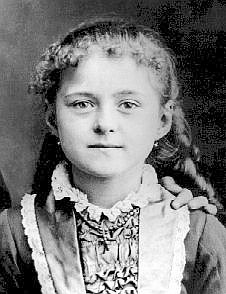
St. Thérèse of the Child Jesus and Holy Face

Today's the most beautiful Feast day of my dearest dearest patron, Saint Thérèse of the Child Jesus and Holy Face! :) Yesterday and today were beautiful days for me. :) There was time (yay!) to go for morning Mass (yay!) and everything was beautiful even amidst all the tests and work that has to be done. I wonder how it must be in heaven. I can't wait. Haha. Pray for me, my dear blog readers, patience really is a necessary virtue.

Now, I'd like to write a little more about St. Thérèse. Here's a link to all I have written about her on my blog. I am sure many of you know a lot about her, after all, she's really really famous =D, "the greatest saint of modern times!" as Pope Saint Pius X said, almost prophetically, way before even St. Thérèse became Saint Thérèse. :) (I mean way before St. Thérèse was canonized.) Thus, I will write more about her prayers and her writings that really characterize and "show-off" what a beautiful most pretty and dear dearest soul St. Thérèse is. Most dear to Jesus and Mary! :)

[All excerpts and phrases etc, taken from various sources, including, The Story of the Soul, St Thérèse of Lisieux By Those Who Knew Her, the 1962 Roman Catholic Daily Missal, Douay-Rheims Holy Bible etc. etc.]

Her ideal throughout her entire life was simple, direct and heroic: "I want to be a saint." and that was all. Her whole life centred on this one ideal. "I want to spend my heaven doing good on earth." Her beautiful autobiography, The Story of a Soul, changed my life in a way I didn't know possible. Deo gratias et Mariae.

As Saint Paul in his second epistle to Timothy wrote: "For God has not given us the spirit of fear, but of power and of love and of prudence." (2 Tim. 1:7) St. Thérèse brought this truth to light for us especially in this modern (or rather now, post modern) world in which we live in. Her holiness, a holiness founded on unshakeable confidence in God and absolute love for Him. Her doctrine of sanctity is enshrined for the ages in her own phrase, "the little way of spiritual childhood." This teaching was not original with St. Thérèse. It was Jesus Himself who taught it. Jesus Himself who urged His followers to become "as little children", as we read in today's Gospel. And today's Epistle is also very very beautiful. This epistle, taken from the old testament (the prophet Isaias) was something special to St, Thérèse during her short but extremely beautiful life. Here it is:

"Thus saith the Lord: Behold I will bring upon her as it were a river of peace, and as an overflowing torrent the glory of the Gentiles which you shall suck; you shall be carried at the breasts, and at the knees they shall caress you. As one whom his mother caresseth, so will I comfort you: and you shall be comforted in Jerusalem. You shall see and your heart shall rejoice, and your bones shall flourish like an herb, and the hand of the Lord shall be known to his servants." (Is.66:12-14)

And also, the Gradual of the Mass today is also very very beautiful:

"I confess to Thee, O Father, Lord of heaven and earth, because Thou hast hid these things from the wise and prudent and hast revealed them to little ones. My hope, O Lord, from my youth." (Mt. 11:25; Ps. 70:5)

What is love?

St. Thérèse explains in her own good way:

Here's an excerpt from a testimony by Sister Marie-Joseph of the Cross, O.S.B. who was the maid and governess under the service of M. Guerin, St Thérèse's uncle, before she joined the Benedictine nuns of the Blessed Sacrament at Bayeaux. She was the 8th witness and she testified this on 12-15 December 1910:

"Shortly after her first communion, when she was about twelve, she used to talk to me about God: how good he was to those who loved him, the love he bore each of us individually. As I did not feel all that much love for him, and said as much to her, she explained that love was not a matter of what you felt but of practising virtue, and that we should always try to please God in the least of our actions, without any attempt to draw attention to ourselves."


When the witness, Marcelline, before she became a nun, told St Thérèse that she intended to become a nun, St Thérèse told her this:

"we must always Love God a great deal, and to prove that love we must make all the sacrifices he asks of us. Don't worry, I'll be praying for you. Love God so that you won't be too afraid of him; he is so kind, really! Remember too to pray for those who do not love him, so that we can convert many souls."

As such, love of God equates love of sacrifice. The true definition of love is:

Love = Sacrifice

Love and Sacrifice are 2 things so interconnected, they cannot be separated. If you say you love someone, you say that you are willing to give your life for that someone. And, how beautiful that love is, so gentle, so warm, so tender, so infinite, that He would give up his life, hanging on something most disgusting, in order to bear the burden of our sins, our iniquities?

God chose St. Thérèse to dramatize this truth, to love and be like "little children", anew, reminding us always that great love, not great deeds, is the essence of sanctity.

What is perfection?

Perfection consists in doing His will, in being that which He wants us to be.

As St. Thérèse wrote in her autobiography.

"Jesus saw fit to enlighten me about this mystery. He set the book of nature before me and I saw that all the flowers He has created are lovely. The splendour of the rose and the whiteness of the lily do not rob the little violet of its scent nor the daisy of its simple charm. I realised that if every tiny flower wanted to be a rose, spring would lose its loveliness and there would be no wild flowers to make the meadows gay.

It is just the same in the world of souls - which is the garden of Jesus. He has created the great saints who are like the lilies and the roses, but He has also created much lesser saints and they must be content to be the daisies or the violets which rejoice His eyes whenever He glances down. Perfection consists in doing His will, in being that which He wants us to be.

I also understood that God's love shows itself just as well in the simplest soul which puts up no resistance to His grace as it does in the loftiest soul. Indeed, as it is love's nature to humble itself, if all souls were like those of the holy doctors who have illumined the Church with the light of their doctrine, it seems that God would not have stooped low enough by entering their hearts. But God has created the baby who knows nothing and can utter only feeble cries. He has created the poor savage with no guide but natural law, and it is to their hearts that He deigns to stoop. They are His wild flowers whose homeliness delights Him. By stooping down to them, He manifests His infinite grandeur. The sun shines equally both on cedars and on every tiny flower. In just the same way God looks after every soul as if it had no equal. All is planned for the good of every soul, exactly as the seasons are so arranged that the humblest daisy blossoms at the appointed time."

Beautiful. Dearest Jesus, help me only to do what Thou wilt want me to do. Thy Holy Will is most perfect.

Saint Thérèse's name in religion was Thérèse of the Child Jesus and Holy Face.

She composed a beautiful prayer in honour of His Most Holy Face:

"Jesus, Who in Thy bitter Passion didst become "the reproach of men and the Man of Sorrows", I venerate Thy Holy Face on which shone the beauty and gentleness of Divinity. In those disfigured features I recognize Thine infinite love, and I long to love Thee and to make Thee loved ...

May I behold Thy Glorious Face in Heaven!"

And here's a beautiful prayer I'd like to add here in this post to dearest St. Thérèse, my patron:

St. Thérèse, the little flower, please pick me a rose from the heavenly garden and send it to me with a message of love. Ask God to grant me the favour I thee implore and tell Him I will love Him each day more and more.

And here's an excerpt from Alone with God by Fr. Heyrmann S.J.:

October 3

St. Thérèse of the Child Jésus and Holy Face

1. In the Mass we read a passage of the Gospel hat is most appropriate to this Saint. It sounds as if Jesus was introducing “Little Thérèse” to the modern world: “Amen I say to you, unless you be converted and become as little children, you shall not enter into the kingdom of heaven” (Mt. 18:3). Thérèse of Lisieux never had any need of being converted: she was a child to the very marrow of the bones; never was she anything else; never did she wish to be anything else. She said, “Even if I were to live many more years, I would take care to remain a little child.”

2. Petition: The grace to grasp the Lord’s doctrine about becoming like little children: may we tread courageously the “Little Way” of St. Thérèse, which she paved and followed so heroically.

I. Little in Appearance

At first sight, and on a superficial estimate, St Thérèse does by no means appear a “grand Saint”. She made no foundations, worked no striking miracles, had no ecstasies, did nothing extraordinary, taught no wonderful doctrine. Her “teaching”, however original and personal it may have been, was exceedingly simple: “My little doctrine,” as she used to say. Nothing in her life, before or after her entrance into religion, could be described as extraordinary. When at the age of 24 she died, a fellow religious is recorded to have observed, “I wonder what one can say about her in her obituary notice.” Of that, God Himself had taken care. At the command of her Superior, she herself had written an account of her life. She did know that God had something to say to the world through her.

Yet, in her own eyes, she was and remained little. God was her Father and she was His child; and of this relation of child to Father she was fully convinced; this fact pervaded her whole life and her spirituality. Her style of writing and her figures of speech are childlike – perhaps they border on the childish; she is a ball with which Jesus plays as He pleases; if she meets an obstacle, she does not dash against it; being small, “she creeps beneath”.

“I am too little to be damned,” she once said humorously, yet very profoundly; her style bristles with diminutives.

If in all sincerity the great St. Paul could think and say that in him “God hath chosen the foolish things of the world, and the things that are contemptible, and the things that are not, that he might bring to nought things that are” (1 Cor. 1:27, 28), then we can readily understand what a poor opinion little Thérèse entertained of herself. But because of this poor opinion God chose to do great things through her.

II. Great in Truth

In this “little soul”, there is nothing that is petty, or childish. She loves to draw her figures of speech from the world of children, but in her spiritual life she is an adult, perfectly mature, and brave, who, like St. Paul, “had put away the things of a child”. Sensible devotion and consolation in prayer, anxiety to calculate what progress one is making or to gather merits she had gone beyond all these trappings of the spiritual life, that she might cling firmly to God’s holy will. “I have only one joy: to suffer for Jesus; and this joy, though not a matter of feeling, still surpasses every other joy … I have found the secret how to suffer in peace and joy: we need only will what God wills.” She was courageous: True courage,” she wrote, “consists in this: to desire the cross, even with dread in your heart, and with internal repugnance, as Jesus in the garden.” Her “Little Way” of total surrender to God in self-forgetting love, comes indeed very close to the “yet a more excellent way”, of which St Paul wrote to the Corinthians (1 Cor. 12:31).

Her zeal for the Missions throughout the world, and the letters she wrote to missionaries, proved the largeness of her heart: from the narrow window of her cell her eyes surveyed the whole world. Pope Pius XI appointed her Patroness of the Missions, together with St. Francis Xavier, the great Apostle of modern times.

III. God’s Work in Her

Little Thérèse was aware that she was a privileged child of God, and that God wanted to give through her a message to the Church. “Mother,” she once said to her Prioress, “you thought you were not imprudent when you told me that God had enlightened my soul, and had given me the experience of mature years. I am too small to grow vain on that account; too small to look for appropriate words to express how humble I am; I prefer to say the simple truth: He that is mighty hath done great things to me.” Throughout life her love of truth and of absolute sincerity was very great. She abhorred whatever savoured of sham, or pretence, or insincerity. To the world, and more still to all who in religion strive after perfection, she has announced the glad tidings that the greatest perfection can be achieved in the humblest surroundings, and in the most complete separation from the world.

Prayer: O Lord, who hast said, Unless you become as little children you shall not enter into the Kingdom of heaven; we ask of Thee the grace so to follow, by humility and simplicity of heart, in the footsteps of the virgin Saint Thérèse, that we may win eternal rewards. Who livest and reignest world without end (Collect of the Mass of today).

(as with St. Thérèse:) O Mon Dieu, comment je T'aime!

Deus propitius esto mihi peccatori

Jesus, Mary, I love Thee; Save Souls!

Jesu mitis et humilis corde, Fac cor nostrum secundum Cor tuum. (ter)

Labels: ,

Tuesday, October 02, 2007

The Holy Guardian Angels =D

Today's the Feast of the Holy Guardian Angels =D What a beautiful day! My darling angel guardian, I love thee! :) Here's an excerpt from Alone with God by Fr Heyrmann S.J. on the Feast of the Holy Guardian Angels.

Alone with God

By Fr. J. Heyrmann S.J.

October 2

Feast of the Holy Guardian Angels

1. There is nothing childish in the belief that God has appointed His angels to guard and protect man: it expresses the wonderful mutual relationship, which Providence in its ineffable goodness has established between ourselves and the heavenly spirits. It is a pity that this ancient belief, for which there is proof in Scripture, is proposed generally to children only. It is comforting and salutary to every man to reflect how God Almighty, in His loving kindness has appointed higher beings to render service to others of an inferior rank.

2. Petition: The grace to gain a better understanding of the wondrous manner in which almighty God rules the world of spirits: may we be duly grateful for His paternal kindness; and may we pay due homage to, and have perfect confidence in our Guardian Angel, our faithful and lifelong companion.

I. The Doctrine of the Church

In the Old Covenant God said to Moses: “Behold I will send my angel, who shall go before thee, and keep thee in thy journey, and bring thee into the place that I have prepared” (Ex. 23:20). The Church, in her liturgy, applies to every Christian what God promised to the leader of Israel, and in him to the whole chosen people. At the time of Baptism the child of God is entrusted to one of the “thousands of thousands”, whom John beheld “round about the throne” (Apoc. 5:11). These are the courtiers of the Lord of hosts, who uses them as His messengers to men, and as helpers in the great work of salvation. In Psalm 90 God comforts Israel saying: “He hath given His angels charge over thee, to keep thee in all thy ways” (11). God sent the Archangel Raphael to guide and protect young Tobias on his long journey, and to bring him home in safety.

In the Gospels the angels are mentioned often: they are always represented as God’s ministers and man’s guardians. Jesus especially showed them to us as protectors of little children when he warned against scandal. “See that you despise not one of these little ones: for I say to you that their angels in heaven always see the face of my Father who is in heaven” (Mt. 18:10).

Jacob’s vision gives us a striking picture of that invisible, yet very real and very active communication between heaven and earth, in which God uses the ministry of His angels: “And he saw in his sleep a ladder standing upon the earth, and the top thereof touching heaven: the angels also of God ascending and descending by it” (Gen. 28:12).

We offer thanks to God, “who does wonderfully order and dispose the service of angels and of men” (Collect, St. Michael).

II. In The Service of Men

If not every man, certainly every Christian at Baptism, has been entrusted by God to an angel, whose duty it is to guide and protect him throughout life, till the hour of death. We do not quite understand how he, a pure spirit, finds means to protect us in the spiritual and in the material order; how he influences our thoughts and our actions; how he can safeguard our thoughts and our actions; how he can safeguard us against danger. But if God has entrusted such an office to our Guardian Angel, He has surely given him the means of fulfilling it. And we may rest assured that he acquits himself of his duty with loving devotion. St. Peter tells us, and we repeat it every day at Compline, that our adversary the devil, like a roaring lion, goes about seeking whom he may devour (1 Pet. 5:8). We ought to remember that another spirit faithfully watches over us until death, a spirit that never lapsed from heaven, and that is stronger than the fallen angel.

Cardinal Newman, who had a great devotion to the angels, places the following words in the mouth of the Guardian Angel of Gerontius, whilst he leads the latter’s soul to God immediately after death:

My work is done
My task is o’er,
And so I come,
Taking it home
For the crown is won
Alleluia
For ever more.
My Father gave
In charge to me
This child of earth
E’en from its birth,
To serve and save,
Alleluia,
And saved is he!
(The Dream of Gerontius)

III. Our Duty

Remembering those truths, we should thank God, our heavenly Father, who has appointed His angels to help us: we will remember the presence and the devoted care of the companion whom God has given us during our pilgrimage, and we should keep our soul every open to his influence. (According to St. Thomas spirits know one another simply by so willing.) We will confidently appeal to his protection in all difficulties and dangers: so did many saints, for instance St. Frances of Rome, whom “in addition to other gifts, God ennobled by familiar intercourse with an angel” (Collect of the Mass). Tell me the company thou keepest, and I will tell thee what kind of man thou art. Familiar intercourse with the pure spirit, who is our faithful companion throughout life, must inevitably have an elevating and spiritualizing influence on our soul.

Prayer: O God, who showest Thy ineffable Providence in graciously appointing Thy holy Angels as our guardians: grant that we, who humbly pray to Thee, may be always defended and protected by them, and may enjoy their company for all eternity. Through our Lord (Collect of the Mass of today).


Deus propitius esto mihi peccatori.

Jesus, Mary, I love Thee; Save Souls!

Jesu mitis et humilis corde, Fac cor nostrum secundum Cor tuum. (ter)

Labels: ,

Saturday, September 29, 2007

The Feast of the Dedication of St. Michael the Archangel

Today's the Feast of the Dedication of St. Michael the Archangel. On this day, the Basilica was consecrated to St. Michael by Boniface II on the site of the Roman circus.

Also, it's towards the end of September, now moving on to October (in 1 day) - which will be the month of the Holy Angels =D with the feast day of the Holy Guardian Angels on Oct 2 and my dearest patron, Sancte Therese on Oct 3! So today's Feast day of St. Michael is in preparation for the month of October, the month of the dearest Angels, all the dearest Angels, the nine choirs of whom we know only 3 names of the greatest angels that are: St Michael (Who Is Like God), St Gabriel (Strength of God) and St Raphael (Medicine of God), who see the face of God and that help and guide us along our pathway, our journey towards eternity in this earthly life. :)


"And obviously great is the mystery of godliness: Which was manifested in the flesh, was justified in the spirit, appeared to the angels, was preached to Gentiles, believed in the world, taken up in glory."

-The First Epistle of St. Paul to Timothy 3:16-

From the Hymn at Vespers today:

O Thou, the Father’s glorious Might,
Jesus, true life of every heart,
Thee do we praise amid Angels bright
Whose hope and light alone Thou art.

A thousand thousand hosts, for Thee,
Of glorious warriors, battle wage;
But Michael waves Thy standard free,
Salvation’s cross and victory’s gage.

The dragon fierce with stubborn crown
He hurls to lowest depths of hell;
The rebel crew, their prince overthrown,
He thrusts from heaven’s high citadel.

The prince of pride may we, too, fight,
And follow this, our captain true,
That so the crown with glory dight
By Jesus given, may be our due.

Glory be to God the Father,
Who protects by His Angels,
Those whom the Son redeemeth
And the Holy Ghost anointeth. Amen.

V. The Angel stood by the altar of the temple.
R. Holding in his hand a censer of gold.

Beautiful! :)

From the Antiphon at the Magnificat of First Vespers today:

While John was beholding the sacred mystery, the Archangel Michael sounded a trumpet. Forgive us, O Lord our God, Thou who openest the book, and loosest the seals thereof. Alleluia.

Deus propitius esto mihi peccatori.

Jesus, Mary, I love Thee; Save Souls!

Jesu mitis et humilis corde, Fac cor nostrum secundum Cor tuum. (ter)

Labels: , ,

Thursday, September 27, 2007

A Wondrous Exchange


"A Wonderous Exchange"

Jesus is the Holy Eucharist, the Holy Eucharist is Jesus, [Jesus (Body,Blood,Soul,Divinity) =Holy Eucharist]

There's no other way to better describe what is the Holy Eucharist, the greatest love residing, so devoid of the majesty that He is supposed to get, all for love of us. Dearest Sacred and Eucharistic Heart of Jesus, Have Mercy on us!

Excerpts from Alone with God by Fr. J Heyrman S.J. and The Holy Eucharist by St. Alphonsus Ligouri

At Holy Mass, something happens which can be compared to a commercial transaction - but Holy Mass is so so so much more than just a commercial transaction. :) It is the actual sacrifice on Calvary, repeated daily, at every Mass, by the hands of a consecrated man, the very important priest.

We offer ourselves as holocausts, a humble offering of ourselves (our whole lives, all that we have, all that we are, heart to Heart) to the Almighty. But what do we get in exchange? We get, by Faith, the Body and the Blood of His Son, Our Lord Jesus Christ, all present Body, Blood, Soul and Divinity in the Most Holy Eucharist.

This exchange is out of proportion. Totally.

It is an utterly unequal, a wondrous, a divine exchange: through the Consecration Jesus has been made present under the appearances of bread and wine, and through the hands of the priest He offers Himself to the Father; and the Father gives us back our oblation, which is now Christ Himself. as a sacrificial banquet in Holy Communion.

It is a sublime exchange resulting in a most awe-inspiring and most ineffable union: "He that eateth my flesh and drinketh my blood abideth in me, and I in Him" (John 6:57).

By Faith we know that this is true and real; we know it with a certitude, surpassing all human certitude, yet a certitude wrapped in the darkness of faith.

Taught by Christ, the Church maintaineth
That the Breath its substance changeth
Into Flesh, the wine to Blood.
Doth it pass thy comprehending?
Faith, the law of sight transcending,
Leaps to things not understood.

But in order to grasp the truth, our proud spirit must renounce its conceit and humbly bow before the power of God "with whom no word shall be impossible".

I believe all the Son of God has spoken,
Than truth’s own word, there is no truer token.

"Ego autem non contradico." - Isa. I.5 (And I do not resist). Jesus in the Most Holy Sacrament remains there without moving Himself; HE allows Himself to be placed where men will, be it for exposition in the remonstrance, or to be enclosed in the tabernacle. He allows himself to be carried wheresoever He is borne, be it in houses or through the streets; He allows Himself to be given in Holy Communion to whomsoever He is administered, be they just or sinners. St. Luke says that whilst He dwelt on earth He obeyed the Most Blessed Virgin Mary and St. Joseph; but in this Sacrament, he obeys as many creatures as there are priests on earth: and I do not resist. Amor amorum - the Love of all Love.

As St. Thomas Aquinas so beautifully puts it in the Adoro Te Devote

Jesus, whom for the present veiled I see,What I so thirst for, oh! vouchsafe to me:That I may see Thy countenance unfolding,And may be blest Thy glory in beholding.

From the Holy Mass, we can see the beauty of the priesthood, what a priest really is! The priesthood exists solely for the continuation of the Holy Sacrifice of the Mass.

"Holy Orders, however, not only bestows on the priest the graces which he will require to perform his priestly functions fittingly, but imprints upon his soul an indelible seal (the character) by which he receives the power to accomplish sublime acts of worship and of sanctification (the Mass and the Sacraments) with a power almost divine."

Here's what Archbishop Lefebvre spoke about, on the true nature of the Priesthood. From the Apologia pro Marcel Lefebvre, Vol. 3, Chapter LV. What is the Priesthood?

O Mary, Queen of the Clergy, Pray for us and send us many and Holy Priests! (ter)

The Golden Arrow

May the most holy, most sacred, most adorable, most mysterious and unutterable Name of God be always praised, blessed, loved, adored and glorified in heaven on earth and under the earth, by all the creatures of God, and by the Sacred Heart of our Lord Jesus Christ in the most Holy Sacrament of the altar.

This prayer was revealed by Our Lord to a Carmelite Nun of Tours in 1843 as a reparation for blasphemy.

"This Golden Arrow will wound My Heart delightfully." He said, "and heal the wounds inflicted by blasphemy."

Deus propitius esto mihi peccatori

Jesus, Mary, I love Thee; Save Souls!

Jesu mitis et humilis corde, Fac cor nostrum secundum Cor tuum. (ter)

Labels: ,